
Hands-On Physiotherapy: What to Expect from Treatment
Many people in Colchester and beyond associate physiotherapy with massage, joint movements, stretching or other forms of hands-on treatment. These approaches can sometimes help reduce pain, improve movement and make it easier to begin or progress rehabilitation.
However, good hands-on therapy is not simply a case of a physiotherapist finding a painful spot and working on it as hard as possible. It should be part of a considered assessment and treatment plan built around your symptoms, goals and day-to-day needs.
Your story comes first
Before treatment begins, your physiotherapist should listen carefully to what has happened, how your symptoms behave and what you are hoping to achieve.
This may include:
Exploring relevant factors such as stress, sleep, work demands, exercise habits, sport and recent changes in activity.
What aggravates or eases your symptoms.
Previous injuries, surgery, signs of incomplete rehabilitation and any health issues.
Any changes in strength, mobility or confidence.
What you most need help with during the appointment.
Not every part of the assessment will have the same priority. You can reasonably expect your physiotherapist to focus first on the issues that matter most for your safety, symptoms and goals. They should also explain whether hands-on treatment is appropriate, what can be addressed during the appointment and what may need more time.
Assessment should guide treatment
Hands-on treatment should not be used as a substitute for assessment. Your physiotherapist should first develop a reasoned understanding of what may be contributing to your symptoms and then select treatment that is appropriate for you.
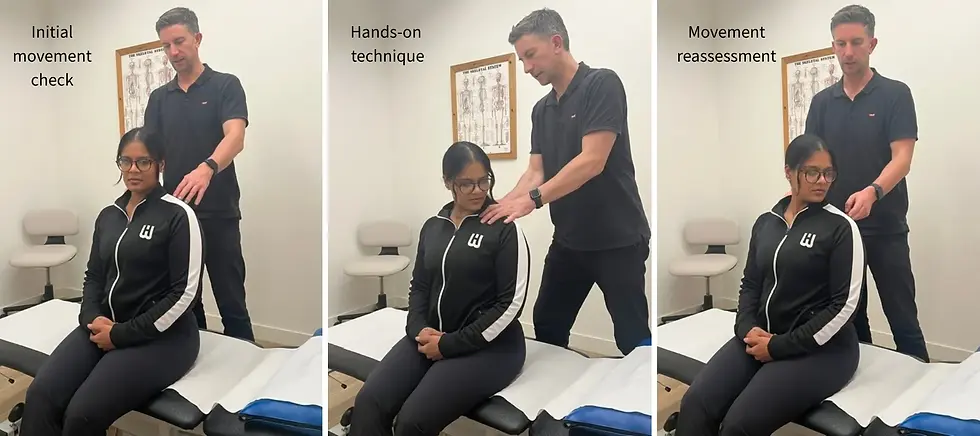
This may involve feeling specific areas, assessing movement, strength, joint mobility and coordination, and observing how your symptoms respond to particular tasks. Treatment can then be followed by a simple reassessment.
For example, if turning your neck is painful, your physiotherapist may assess that movement, apply an appropriate technique and then check whether turning has become easier. That change helps decide whether the technique is useful and what should happen next.
For someone struggling with a painful squat, step-down or running movement, hands-on treatment may be used to make the movement feel more comfortable before reassessing the task.
This “test and retest” approach is more meaningful than assuming that treatment is effective simply because it feels good or intense. In our clinic, hands-on treatment is used when it changes a movement that matters in the room. If nothing meaningful changes, the plan is adjusted rather than repeating the same technique.
It should feel safe and individualised
Good hands-on therapy should be adapted to your preferences, symptoms and tolerance, which is why choosing the right physiotherapist matters. Your physiotherapist should explain what they are doing, check your consent and communicate with you throughout the treatment.
Treatment does not need to be painful to be effective. Some techniques may feel unfamiliar, tender or uncomfortable, but you should not feel pressured to tolerate unnecessary or uncontrollable pain. You should be able to say if something feels too uncomfortable, worrying or different from what you expected.
A good appointment should leave you feeling that your concerns have been heard and that your symptoms, movement and relevant contributing factors have been properly assessed. The aim is not simply to "poke and prod" a painful area, but to help you understand what may be contributing to the problem and what you can do next.
What to expect after hands-on therapy
The duration and intensity of hands-on therapy should be based on your symptoms, preferences, goals and response during the appointment.
You may notice some mild tenderness or a temporary change in your symptoms afterwards. Your physiotherapist should explain what response is expected, how long it may last and what to do if your symptoms become more irritable than anticipated.
Any change in pain, movement or confidence can provide useful information, but it should not be the only measure of progress.
Your therapist should also explain whether you need to modify your home exercises or usual activities and when to seek further advice. If you are not getting clear explanations or are unhappy with the hands-on therapy, it may be time to reconsider your physiotherapy.
In practice, I often see people judge treatment by how sore or good they feel afterwards. A strong treatment response can feel convincing, but symptom relief or soreness alone does not tell you whether the treatment was useful.
What hands-on therapy can and cannot do
Manual therapy can ease symptoms, improve short‑term movement, and help you feel more confident using an area that’s become painful or stiff, but these effects are usually temporary.
For that reason, high-quality clinical guidelines recommend using manual therapy alongside education and exercise rather than as a stand-alone treatment. Depending on your needs, that might include strengthening, mobility or balance work, a gradual increase in activity, or a return to sport.
To explore the active side of recovery, read more about building sustainable movement habits, improving single‑leg balance and preparing to return to sport.
Understanding what can change
Some restrictions are influenced by pain, protective muscle tension, weakness, reduced confidence or changes in movement. These may respond well to a combination of hands-on treatment, exercise and a gradual increase in activity.
Other limitations may relate to factors that hands-on therapy cannot substantially change, such as significant joint damage, post-operative restrictions or established structural changes. This does not mean that treatment cannot help your symptoms or function. It means that your physiotherapist should explain what is realistic, what may take time and when further medical assessment could be appropriate.
Working alongside orthopaedic, neurological and other specialists has taught me that the most useful treatment is not always the most hands-on treatment. It is the treatment that matches what is limiting you, what can realistically change and what you need to do next.
The key question
The best hands-on therapy is not necessarily the strongest, most painful or most complicated. It is the treatment that is properly considered, clearly explained and linked to your goals.
You should finish an appointment with a better understanding of your symptoms, a clearer idea of what to do next and a plan for progressing beyond the treatment table.
If pain, stiffness or an injury is affecting your everyday activities, exercise or sporting performance, a personalised physiotherapy assessment can help you identify the most appropriate next steps, whether that’s in‑person treatment in Colchester or an online session focused on advice, exercise and a structured plan.
Frequently asked questions
Do I need hands-on therapy?
Not necessarily. Hands-on treatment can be helpful for short-term pain relief, improved movement and confidence, but it is not essential for everyone. Many people recover well with education, activity modification and a structured exercise programme. Your physiotherapist should explain whether hands-on techniques are likely to add value in your case and how they fit into your overall rehabilitation plan.
What should I expect from a good hands-on physiotherapy session?
A good session should begin with a detailed discussion of your symptoms, goals and daily activities before any treatment is used. Your physiotherapist should explain what they are doing, check your consent and adapt techniques to your preferences and tolerance. You should finish with a clearer understanding of your symptoms and a plan for what to do next, not just a passive treatment experience.
Can hands-on physiotherapy help with back and neck pain?
It can help some people feel more comfortable and move more easily, depending on their symptoms and assessment. For low back pain, NICE recommends considering manual therapy only as part of a treatment package that includes exercise.
For neck pain, whether hands-on treatment is useful also depends on the individual and should be considered alongside movement, exercise and advice. We check whether treatment makes a meaningful difference to a movement that matters to you, then use that response to guide the next step.
What if I don’t want hands-on treatment?
You can still receive effective physiotherapy. Many problems can be managed with assessment, education, exercise and activity modification alone. Tell your physiotherapist if you prefer to avoid hands-on techniques; they should be able to tailor your treatment plan to your preferences while still addressing your goals.
For many musculoskeletal issues, online physiotherapy has been shown to be as effective as face-to-face care for pain and function, making it a suitable option if you would rather focus on assessment, advice and exercise without hands-on treatment. REFORM trial.
If you are considering remote care, you can read more about online physiotherapy.
References and further reading
Lin I, Wiles L, Waller R, et al. What does best practice care for musculoskeletal pain look like? Eleven consistent recommendations from high-quality clinical practice guidelines: systematic review. British Journal of Sports Medicine. 2020;54(2):79–86.https://bjsm.bmj.com/content/54/2/79
Bronfort G, Haas M, Bronfort R, et al. Effectiveness of manual therapies: the UK evidence report. Chiropractic & Osteopathy. 2010;18:3.https://www.ncbi.nlm.nih.gov/pmc/articles/PMC2841070/
Hinman RS, et al. Remotely delivered physiotherapy is as effective as face-to-face physiotherapy for musculoskeletal conditions (REFORM): a randomised trial. J Physiother. 2024;70(2):120–128. https://www.sciencedirect.com/science/article/pii/S1836955324000171
About The Author

Dan Watson is a Chartered Physiotherapist based in Colchester, Essex, specialising in the assessment and treatment of pain, injury and movement-related problems.
With over 15 years’ experience, Dan has supported everyday patients and athletes across football, rugby and The Royal Ballet. His approach combines clear assessment, practical education and progressive rehabilitation tailored to each person’s goals.
He provides face-to-face physiotherapy in Colchester, the wider Essex area and online support for suitable patients across the UK. Read more about Dan’s background and credentials.


Comments